The
kingdom also announced a new female deputy minister of labour and social
development as it tries to broaden the role of women in the workplace.
Saudi
Arabia made the announcement Tuesday in a flurry of royal decrees carried by
the state-run Saudi Press Agency. As
with many announcements in the ultra-conservative Sunni kingdom, it was short
on details.
King
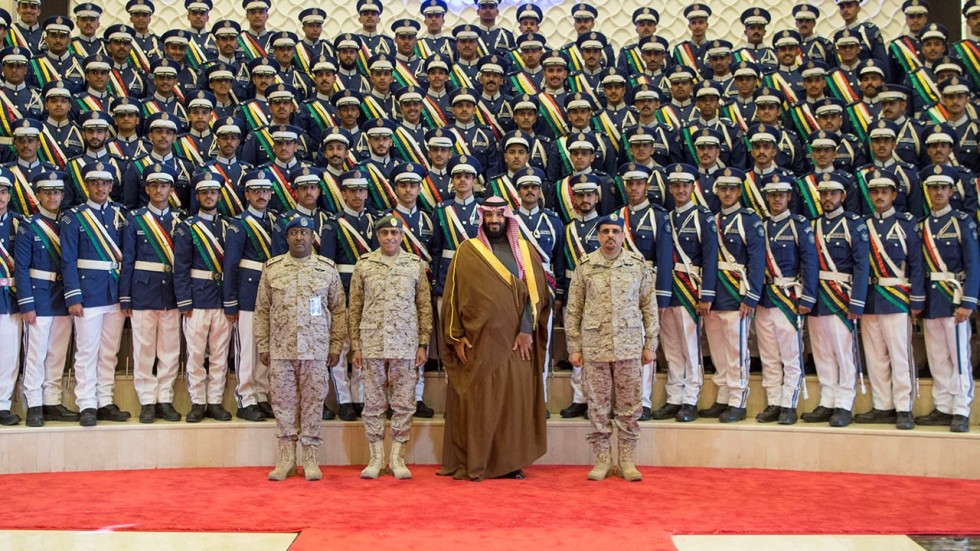
Salman “approved the document on developing the Ministry of Defence, including
the vision and strategy of the ministry’s developing programme, the operational
pattern targeting its development, the organisational structure, governance and
human resources requirements,” one statement said.
That
restructuring was part of a “multiyear effort,” Prince Faisal bin Farhan, a
senior adviser at the Saudi embassy in Washington, wrote on Twitter.
Prominent
among the personnel changes was the firing of military chief of staff General
Abdulrahman bin Saleh al-Bunyan. Another announcement said the general would
become a consultant to the royal court.
Al-Bunyan
was replaced by General Fayyadh bin Hamid al-Rwaili, who once had been the
commander of the Royal Saudi Air Force, among the nation’s premier military
forces.
Also
appointed as an assistant defence minister was Khaled bin Hussain al-Biyari,
the CEO of the publicly traded mobile phone and internet service provider Saudi
Telecom Co.
The
decisions come as the Saudi-led coalition, chiefly backed by the United Arab
Emirates, remains mired in a stalemate in Yemen, the Arab world’s poorest
country.
Over
10,000 people have been killed in the war in which Saudi-led forces back
Yemen’s internationally recognised government against Shiite rebels and their
allies who are holding the Yemeni capital, Sanaa, and much of the north of the
country.
The
kingdom faces wide international criticism for its air strikes killing
civilians and striking markets, hospitals and other civilian targets. Aid
groups also blame a Saudi-led blockade of Yemen for pushing the country to the
brink of famine.
Crown
Prince Mohammed bin Salman, the heir to the throne after his father King
Salman, is the Saudi defence minister and architect of the Yemen war.
While
the crown prince has burnished his reputation abroad with promises of business-friendly
reforms and other pledges, his role in Yemen haunts that carefully considered
public personae.
But
the overhaul in the Saudi defence forces should not be seen only as a reaction
to the Yemen war, said Becca Wasser, a Washington-based RAND Corp. analyst
specialising in Gulf security who has travelled to Saudi Arabia in the past.
The
war in Yemen functions “to push these reforms forward, but it’s not the
driver,” Wasser said.
In
general, Wasser said such an overhaul would include improving training and
recruitment of troops, allocating better resources and changing a military’s
leadership to one willing to hear new ideas and make changes.
Also
noticeable was an effort to include a “careful balancing” of appointments of
others in the Al Saud royal family, said Kristian Coates Ulrichsen, a research
fellow at the James A. Baker III Institute for Public Policy at Rice University
“It
seems the Saudi shake-up is more about moving forward with Mohammed bin
Salman’s attempt to put in place a new generation of leadership in tune with
his vision to transform the structure of Saudi decision making,” Ulrichsen
said.
The
appointment of a woman in a ministerial position, Tamadhir bint Yosif al-Rammah
as deputy minister of labour and social development, comes as the kingdom
prepares to allow women to drive this year and pushes to have more women in
Saudi workplaces.
Also
appointed was Prince Turki bin Talal Al Saud as deputy governor of the Asir
region.
The
prince’s brother is billionaire Prince Alwaleed bin Talal, who recently was
detained for months at the Ritz-Carlton in Riyadh as part of what the
government described as an anti-corruption campaign.
As
with the anti-corruption purge, Wasser said the military overhaul also fit into
the consolidation of power by Crown Prince Mohammed.
“Reform
is a tricky thing to do. To create change in a larger bureaucratic structure
like a military is difficult. To create change in Saudi Arabia … is incredibly
difficult,” she said.
“It
is not going to be easy and change is not going to happen tomorrow. This is
much more of a long-term endeavour.”


No comments:
Post a Comment