Search For Jobs, News, & Business Tips

Tuesday, March 24, 2020

2020 EMI Essay Competition for Undergraduate Students

Applications are invited from undergraduate students in the Nigerian tertiary institutions to participate in the 4th Edition of the Annual Excellent Minds Essay Competition.
The essay competition is focused on promoting critical thinking, harnessing ideas and developing the talents, abilities, gifts and skills inherent in the Nigerian youths. This we expect shall translate into a ripple effect of awareness and provide a platform for growth for future leaders of Nigeria.
This year’s topic draws on the threats of rising inequality in Nigeria and the ongoing climate actions.
Eligibility Criteria
  • The essay is open to undergraduate students in tertiary institutions across Nigeria.
Essay Topic / Overview
    • Climate change and rising inequality in our world are twin threats that are particularly worrisome. In a space where no one is safe from the devastating effects of a heating planet, it is the poor who have done the least to heat the planet, that will suffer first, and the most, from the brunt of these threats in the new decade – if no action is taken to address these issues.
    • In the same vein, despite the significant boom in innovation and local markets in recent times, there are still unfair discrepancies and widening gaps between the haves and have-nots in Nigeria.
  • These inequalities undermine the nation’s democratic system and the future of our young people. Sadly, the rising inequality has a powerful accomplice in climate change. “As a concerned Nigerian, pitch your biggest idea (not more than 1000 words) on how Nigeria can effectively address the double threats of climate change and inequality towards ensuring a sustainable future for its people.”
Excellent Minds Essay Competition Prizes.
  • First Prize: A Laptop + Certificate of Accomplishment
  • Second Prize: A Tablet + Certificate of Accomplishment
  • Third Prize: A Printer + Certificate of Accomplishment
Method of Application
Interested candidates who meet the criteria listed above should submit their entries by clicking on the “Submit” button below:
SUBMIT HERE OFFICIAL LINK
Note:
  • Our adjudicators take plagiarism very seriously. If you are caught plagiarising, you will be disqualified from the competition.
  • In addition to these prizes, we are happy to recognise the top 3 winners of our Essay Competition by publishing their essays on our website for unrestricted access by the online community.
  • Only shortlisted applicants shall be contacted for the next stage.
For further enquiries, please contact: 0803 828 5707, 0706 536 7386, Email: ekagodspi@gmail.com.

2020 Nigeria Higher Education Foundation (NHEF) Scholars Program for Gifted Young Nigerians

Application for the 2020 Nigeria Higher Education Foundation (NHEF) Scholars Program is now open!
Each year, the Nigeria Higher Education Foundation identifies talented young Nigerians from their various Partner Universities that have demonstrated strong academic excellence and well-roundedness in both professional and extracurricular pursuits and provides them with intensive career training and skill-building exercises needed to aid them in long term career development.

The Scholars Program is an early career accelerating program that provides diverse opportunities to the selected Scholars from NHEF various Partner Universities. Each Scholar goes through a weeklong orientation program that exposes them to career development trainings that play a pivotal role in facilitating an easy transition into the global workforce.

During The NHEF scholarship Program, each scholar undergoes intensive trainings by a thoroughly selected group of international facilitators and the Scholars then proceed to take up internship placements at their Partner Firms which typically last between 6 – 8 weeks. They also go through a robust curriculum that ensures their personal and professional  development is continuous.
NHEF Scholars Program Partner Universities.
  • Ahmadu Bello University, Zaria
  • University of Nigeria, Nsukka
  • University of Port Harcourt
  • Kwara State University
  • University of Lagos
  • University of Ibadan
  • Bayero University, Kano
NHEF Scholars Program Eligibility.
  • Open to students in their Penultimate year at the Partner Universities; i.e 300 Level students studying a 4 years course or 400-level students studying a 5 years course.
  • In order to qualify as an NHEF Scholar, each candidate must possess strong commitment to Leadership, Community Service, Philanthropy as well as making a lasting impact across the globe.
Method of Application
Interested candidates who meet the criteria listed above should apply by clicking on the “Apply” button below

APPLY HERE OFFICIAL LINK

Scholarship Application Deadline: 31st March, 2020.

Achievement Award for International Students at University of Birmingham, UK 2020

The University of Birmingham, UK is awarding the International Achievement Award to High achieving students who are interested in pursuing a degree program at the Institution.
This scholarship is awarded to overseas students entering their first year of an undergraduate programme in the School of Engineering in recognition of excellent academic performance. Scholars who continue to meet high academic standards may be eligible for the renewal of their scholarship for each year of study. These are worth £1500.
Eligible Countries: International
Type: Undergraduate
Award: £1500
Number of Awards: Not Known
Eligible Field of Study: Undergraduate program in Civil Engineering, Electronic, Electrical and Systems Engineering, Engineering, Mechanical Engineering Civil Engineering, Electronic, Electrical and Systems Engineering, Engineering, Mechanical Engineering.
Eligibility:
  • Applicants must be International Students
  • Applicants must be fluent in English Language
  • Applicants must have good academic records
Application Process: Click Here To Apply
Visit The Official Website For More Information
Application Deadline: Open

2020 Dean’s Excellence Scholarship for International Students at University of Leeds in UK

Applications are currently invited for the Dean’s International Excellence Scholarship which will be provided to individuals who are interested in undergoing a degree program in University of Leeds – UK.
The funding program assists outstanding students wishing to undertake a master’s degree program with University of Leeds.
Eligible Countries: International
Type: Masters
Value of Award: Full-fee
Number of Awards: Not Known
Eligibility: To be eligible, applicants must;
  • Be able to evidence an outstanding academic track record
  • Be able to demonstrate how you strive for and achieve excellence in your professional and personal experiences through your work history and/or extra-curricular activities
  • Demonstrate evidence of an adequate level of English proficiency.
Application Process: Applicants are advised to first apply for a master’s degree After receiving a conditional or unconditional offer for a Leeds University Business School Taught Masters program, they should complete the online application form.
Visit The Official Website For More Information
Application Deadline: April 30, 2020

2020 International Degree Completion Grants At Universität Hamburg, Germany

These studentships are usually awarded for 6 months with funding ranges between €200 and a maximum of €720.
Eligible Countries: International
Type: Grants
Eligibility: To be eligible for this program, applicants must:
  • not be German citizens;
  • not be eligible for BAföG (federal student loan scheme);
  • be preparing for or are in the final examination phase of their studies;
  • have no financial support during this phase (proof required).
Application Process: For the relevant application periods, please use the corresponding application link and log yourself in using your STiNE ID (detailed instructions on applying online are available here):
Application deadlines 1 June/1 December
Application link 1 June/1 December
Online applications require the following documents:
  • CV
  • reason for your application
  • schedule detailing all steps leading to your final examination
  • an evaluation from the supervisor of your final thesis
Forms: Evaluation for a Universität Hamburg Degree Completion Grant (PDF)
You must upload these documents to the online application portal.
Visit The Official Webpage For More Information
Application Deadline:
  • 1st June 
  • 1st December

Why soap, sanitizer and warm water work against Covid-19 and other viruses


By Sandee LaMotte, CNN


(CNN)Tired of washing your hands for 20 seconds each time? Fingers starting to prune or feel like sandpaper?
Please don't stop.
The world is counting on you to help stop the spread of Covid-19, the deadly new disease caused by SARS-CoV-2, or severe acute respiratory syndrome coronavirus 2.

Take heart that while you're scrubbing, you're also killing off a host of other nasty bacteria and potentially lethal viruses that have plagued humans for centuries -- including influenza and a number of different coronaviruses.

"There are four coronaviruses that circulate in humans regularly, almost every year," said virologist Dr. John Williams, chief of the division of pediatric infectious diseases at the University of Pittsburgh Medical Center Children's Hospital of Pittsburgh.
"And they mainly cause colds; in fact, they cause about a third of common colds. They don't kill people," he added.
Coronaviruses aren't the only nasty parasites that succumb to a vigorous application of soap and water. Influenza -- which kills millions around the world each year -- and the human metapneumovirus, which causes a respiratory infection that can lead to pneumonia, also break down and die.

 How did such a simple thing as soap and warm water -- and alcohol-based sanitizers -- obtain such power over these parasites?

The answer lies in their "skin" and your scrubbing technique.

What soap and warm water do
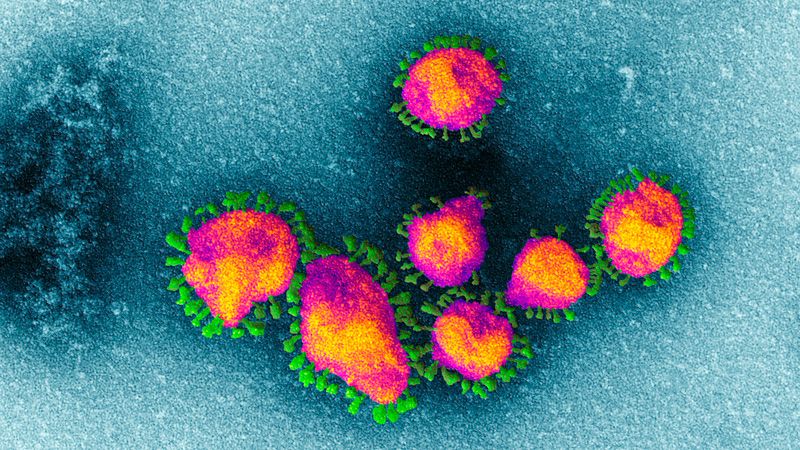
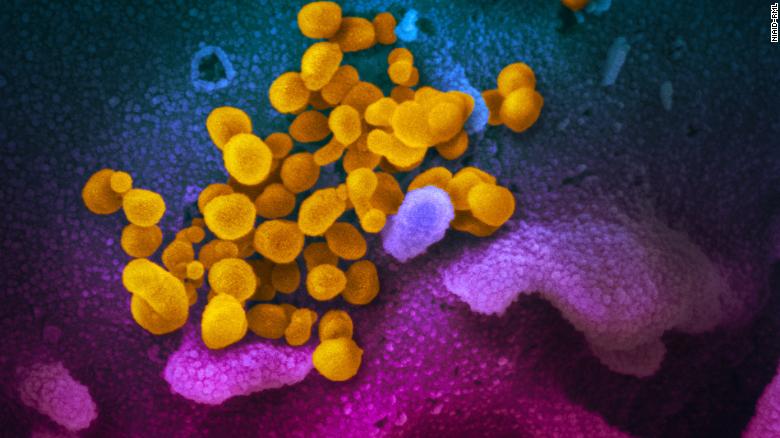
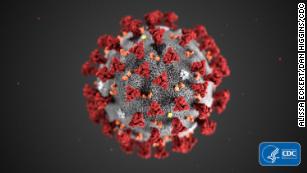
Under the microscope, coronaviruses appear to be covered with pointy spires, giving them the appearance of having a crown or "corona" -- hence the name. Beneath the crown is the outer layer of the virus, which is made up of lipids, or what you and I would call fat.
Now imagine that coronavirus is your butter dish, covered with buttery fat.
"You try to wash your butter dish with water alone, but that butter is not coming off the dish," Williams explained. "You need some soap to dissolve grease. So soap or alcohol are very, very effective against dissolving that greasy liquid coating of the virus."
What does getting rid of that outer layer do to the germ?
"It physically inactivates the virus, so it can't bind to and enter human cells anymore," Wllliams said.

 
Just how soap accomplishes this feat is rather strange and fascinating science.
It's all about how soap molecules are formed -- each looks much like a tiny sperm, with a head and tail. The head bonds with water but the tail rejects it, preferring oil and fat.
Frantically trying to escape water, the tail of the soap is drawn to the fatty outer layer of the virus and begins to pry it open, much like we might use a crowbar to separate two pieces of wood.
Once the virus or bacteria splits open, it spills its guts into the soapy water and dies.

Water and scrubbing with your hands are important to this process because the combination creates more soap bubbles, which disrupt the chemical bonds that allow bacteria, viruses and other germs to stick to surfaces.

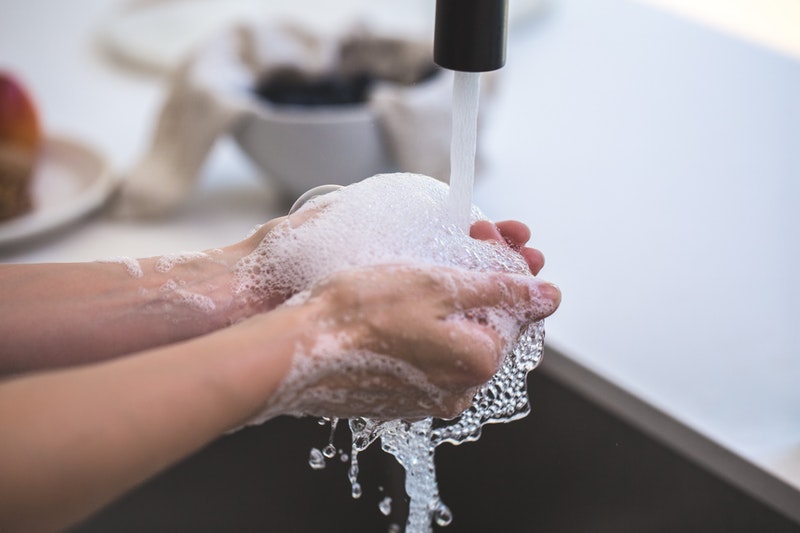
You want to scrub, build up bubbles and scrub some more, getting into every crack and crevice of your hands and fingers, including your fingernails, for 20 seconds, which is about as long as it takes to sing Happy Birthday twice. (But if you're tired of that ditty, there are songs from every decade you can sing instead.)

 
Now, when you rinse your hands, all the germs that have been hurt, trapped or killed by soap molecules are washed away.
"All those bubbles and foam ... literally pick germs up and wash them down the drain," said Dr. William Schaffner, a professor of preventative medicine and infectious disease at Vanderbilt University School of Medicine in Nashville.

You often hear that the water you wash with should be warm, but why? After all, even hot water does not kill bacteria or viruses until you get to a temperature that would scald the skin.
"Cold water will work, but you have to make sure you work really vigorously to get a lather and get everything soapy and bubbly," said chemist Bill Wuest, an associate professor at Emory University who studies disinfectants.

To do that, you might need to sing "Happy Birthday" three times instead of two.
"Warm water with soap gets a much better lather, more bubbles," Wuest said. "It's an indication that the soap is ... trying to encapsulate the dirt and the bacteria and the viruses in them."

What alcohol-based sanitizers do
Alcohol-based hand sanitizers can be as effective as soap if they are used properly, Schaffner explained.


"They need to have at least 60% alcohol in them," Schaffner said. "It's the alcohol that's the virus killer."

Just putting a little dollop in the palm of your hand and wiping quickly isn't good enough, Schaffner said.
"You've got to use enough and get it all over the surfaces," he said. "Rub it all over your hands, between your fingers and on the back of your hands."
"That's because alcohol is a different chemical property," Wuest said. "It helps break up the germ membranes, but you need to make sure it gets into direct contact with the bacteria or virus."
But there are situations in which soap and water are best, Williams said, because of the ability of soap and water to trap and wash microorganisms away.
Get CNN Health's weekly newsletter


"Alcohol is pretty effective at killing germs, but it doesn't wash away stuff," he said. "So you know, if somebody's just sneezed into their hand, and their hand is covered with mucus, they would have to use a lot more alcohol to inactivate that bacteria or virus.
"So if somebody's hands are visibly or grossly contaminated, soap and water are better," Williams said.
That's especially important because there are nasty germs and bacteria out there that don't have soft, fatty bellies that soap bubbles can attack -- such as hepatitis A virus, poliovirus, meningitis and pneumonia.
So the next time you wash your hands for the umpteenth time, take pride in all those soapy bubbles you're creating -- and enjoy the pleasure of imagining those microscopic, dead creatures circle the drain.

Coronavirus disease prevention and causes 2019 (COVID-19) 2020

Overview

Coronaviruses are a family of viruses that can cause illnesses such as the common cold, severe acute respiratory syndrome (SARS) and Middle East respiratory syndrome (MERS). In 2019, a new coronavirus was identified as the cause of a disease outbreak that originated in China.
The virus is now known as the severe acute respiratory syndrome coronavirus 2 (SARS-CoV-2). The disease it causes is called coronavirus disease 2019 (COVID-19).
Cases of COVID-19 have been reported in a growing number of countries, including the U.S. Public health groups, such as the World Health Organization (WHO) and the U.S. Centers for Disease Control and Prevention (CDC), are monitoring the situation and posting updates on their websites. WHO declared a global pandemic in March 2020. These groups have also issued recommendations for preventing and treating the illness.

Symptoms

Signs and symptoms of COVID-19 may appear two to 14 days after exposure and can include:
  • Fever
  • Cough
  • Shortness of breath or difficulty breathing
Other symptoms can include:
  • Tiredness
  • Aches
  • Runny nose
  • Sore throat
The severity of COVID-19 symptoms can range from very mild to severe. Some people have no symptoms. People who are older or have existing chronic medical conditions, such as heart or lung disease or diabetes, may be at higher risk of serious illness. This is similar to what is seen with other respiratory illnesses, such as influenza.

When to see a doctor

Contact your doctor or clinic right away if you have COVID-19 symptoms, you've been exposed to someone with COVID-19, or you live in or have traveled from an area with ongoing community spread of COVID-19 as determined by CDC and WHO. Call your doctor ahead to tell him or her about your symptoms and recent travels and possible exposure before you go to your appointment.
Anyone with respiratory symptoms who hasn't been in an area with ongoing community spread can contact his or her doctor or clinic for further recommendations and guidance. Let your doctor know if you have other chronic medical conditions. As the pandemic progresses, it's important to make sure health care is available for those in greatest need.

Causes

It's unclear exactly how contagious the new coronavirus is. It appears to spread from person to person among those in close contact. It may be spread by respiratory droplets released when someone with the virus coughs or sneezes.
It may also be spread if a person touches a surface with the virus on it and then touches his or her mouth, nose or eyes.

Risk factors

Risk factors for COVID-19 appear to include:
  • Recent travel from or residence in an area with ongoing community spread of COVID-19 as determined by CDC or WHO
  • Close contact with someone who has COVID-19 — such as when a family member or health care worker takes care of an infected person

Complications

Complications can include:
  • Pneumonia in both lungs
  • Organ failure in several organs
  • Death

Prevention

Although there is no vaccine available to prevent infection with the new coronavirus, you can take steps to reduce your risk of infection. WHO and CDC recommend following these precautions for avoiding COVID-19:
  • Avoid large events and mass gatherings.
  • Avoid close contact (about 6 feet) with anyone who is sick or has symptoms.
  • Keep distance between yourself and others if COVID-19 is spreading in your community, especially if you have a higher risk of serious illness.
  • Wash your hands often with soap and water for at least 20 seconds, or use an alcohol-based hand sanitizer that contains at least 60% alcohol.
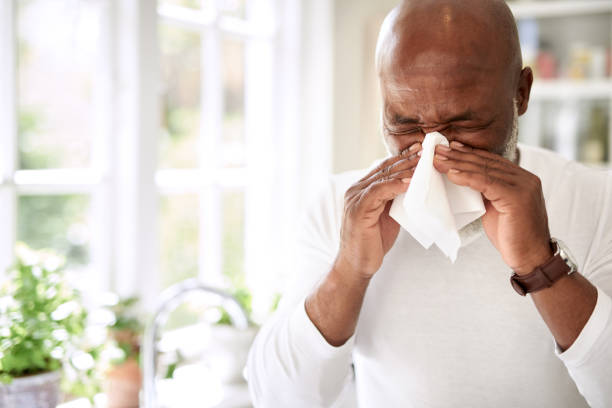
  • Cover your mouth and nose with your elbow or a tissue when you cough or sneeze. Throw away the used tissue.
  • Avoid touching your eyes, nose and mouth if your hands aren't clean.
  • Avoid sharing dishes, glasses, bedding and other household items if you're sick.
  • Clean and disinfect surfaces you often touch on a daily basis.
  • Stay home from work, school and public areas if you're sick, unless you're going to get medical care. Avoid taking public transportation if you're sick.
CDC doesn't recommend that healthy people wear a face mask to protect themselves from respiratory illnesses, including COVID-19. Only wear a mask if a health care provider tells you to do so.
WHO also recommends that you:
  • Avoid eating raw or undercooked meat or animal organs.
  • Avoid contact with live animals and surfaces they may have touched if you're visiting live markets in areas that have recently had new coronavirus cases.
If you have a chronic medical condition and may have a higher risk of serious illness, check with your doctor about other ways to protect yourself.

Travel

If you're planning to travel internationally, first check the CDC and WHO websites for updates and advice. Also look for any health advisories that may be in place where you plan to travel. You may also want to talk with your doctor if you have health conditions that make you more susceptible to respiratory infections and complications.

Coronavirus! Symptoms, Causes And Treatment

Contents
  • 1. What is a coronavirus?
  • 2. Causes
  • 3. Symptoms
  • 4. Treatment
  • 5. Prevention
For the past few weeks, the news has been dominated by the new coronavirus, which originated in China and has already caused over 100 casualties and affected over 6,000 patients. Find out more about the causes, symptoms, and treatment of coronavirus!

1. What is a coronavirus?

Although the recent coronavirus outbreak is new, the coronavirus itself has been known for a long time as one of the leading causes of animal diseases. In fact, the world has first heard about the coronavirus and its deadly effect was in 2002 when two types of coronavirus, Middle East respiratory syndrome (Mers) and severe acute respiratory syndrome (Sars) caused more than 1,500 deaths.
The recent outbreak of coronavirus started in Wuhan, China, and has been named 2019-nCoV. As of today, 2019-nCoV is not as deadly as the Mers and Sars coronavirus of the early 2000s, but with the current death rate of 2%, there are predictions that it will turn out even more deadly than the previous types of coronavirus.

2. Causes

Like many epidemics before it, including flu and ebola, the new coronavirus is believed to have originated in animals. The epicentre of the new disease was the Huanan seafood market, where shoppers could buy live or freshly slaughtered animals. A large part of people infected with coronavirus was either working or shopping in the Huanan market.
The 2019 coronavirus can be transmitted between humans and is thought to be highly infectious. The most common ways to get infected with coronavirus include touching an infected person, as well as the infected person sneezing and coughing nearby a healthy individual.
Given the popularity of Chinese shopping sites such as Aliexpress in Nigeria and around the world, there have been many talks of the risk of getting infected through the goods delivered from China. The good news is that it is highly unlikely that coronavirus will survive for approximately a month independently, which is how long it takes for your purchase to be delivered.

3. Symptoms

One of the major difficulties of diagnosing coronavirus has been the similarity of symptoms of coronavirus and other flu-like diseases. Patients with coronavirus suffer from fever, sore throat, coughing, breathing difficulties, and overall feeling of exhaustion. As coronavirus advances, it also causes pneumonia.

4. Treatment

Coronavirus is a viral infection, which is why it cannot be treated with antibiotics. The antiviral therapy that is used against flu also won’t help in the case of coronavirus. The treatment of coronavirus is aimed at alleviating the symptoms and preventing dehydration, which is why patients receive medication for their lungs, a steady supply of fluids, and medicine against high temperature.

5. Prevention

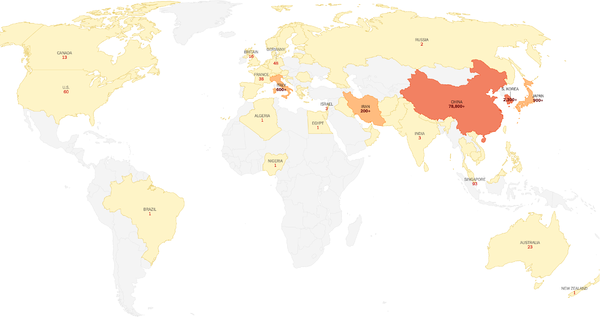
Most of the cases of coronavirus have been diagnosed in China, but over a dozen other countries, including the United States, Canada, France, and Australia, have confirmed cases of coronavirus. Generally, if you haven’t been to China and other countries with confirmed cases of coronavirus since the beginning of 2020 and haven’t met anyone who returned from those regions to Nigeria, you should not worry about contracting coronavirus yet.
As well as with other respiratory infections including flu, proper hygiene is the number one way to prevent getting infected with coronavirus:
  • You should wash your hands every time after you have been in a public place. Never touch your mouth, nose, or eyes before you wash your hands.
  • If you notice anyone in a public location sneezing, coughing, and displaying other symptoms of respiratory disease, it’s best to stay away from them.
  • Carrying a hand sanitizer in your pocket is a good way to ensure your personal hygiene when you cannot wash your hands.

source: jiji.ng

Coronavirus In Nigeria! Safety Tips On How To Protect Yourself From Coronavirus!

Contents
  • 1. Coronavirus in Nigeria
  • 2. Coronavirus in the world
  • 3. How to protect yourself
Back when the first news about the 2019 coronavirus broke, we hoped that the disease outbreak would not affect Africa in general and Nigeria specifically. However, last week Nigeria joined the rest of the countries where cases of the COVID-19 were confirmed. Find out more and learn how to protect yourself right now!

1. Coronavirus in Nigeria

The first case of coronavirus in Nigeria was confirmed last week. It also became the first case of COVID-19 in Sub-Saharan Africa. The first coronavirus patient in Nigeria is an Italian citizen who works in Nigeria. He flew from Milan to Lagos on February 25. Milan is currently one of several Italian citizens who are badly affected by the disease.


Soon after arrival, the man was diagnosed with coronavirus and is currently being treated in a Lagos Infectious Disease Hospital. The patient is said to be in a stable condition and does not display any serious symptoms. The passengers who flew on the same plane as the patient are being contacted by the authorities and warned about the health risks.
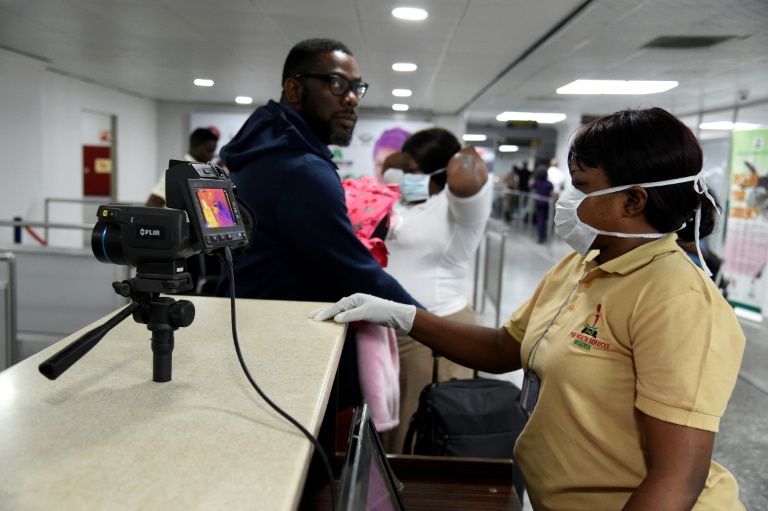
Despite the first case of COVID-2019 being diagnosed in Nigeria, the Nigerian authorities don’t seem to panic or introduce drastic moves like closing down airlines or quarantine for people coming in from abroad. However, there are over 60 doctors from all over Nigeria working in the Lagos airport to screen passengers and spot potentially infected individuals.

2. Coronavirus in the world

Since being diagnosed for the first time in China in early January of 2020, the new coronavirus has spread to over 50 countries. Over 80,000 of confirmed COVID-2019 cases have been diagnosed all over the world with over 2,800 deaths from the disease, with most of them happening in the Hubei province of China, where the disease first got its start.


In two months since the beginning of the outbreak, many countries introduced serious measures for preventing new cases of the virus, including quarantine for people coming into the country or suspending air travel from China and other countries. Scientists are also currently working on a vaccine against coronavirus, but developing a vaccine is a lengthy process and we shouldn’t look forward to it in the coming months.

3. How to protect yourself

If you have respiratory symptoms and have reasons to suspect you may be infected by COVID-2019 – for example, if you have recently arrived from abroad or met someone who travelled to China and back – you shouldn’t hesitate to contact your local health provider who will either rule out the possibility of coronavirus or ensure appropriate treatment.
If you want to stay safe during the growing number of people infected with coronavirus, there are a few measures you can take:
  1. When you are out in public and someone sneezes, coughs, or displays other symptoms of respiratory disease, try to stay at least 1 meter away from that person at all times.
  2. Wash your hands with soap every time you come home from the street, go to or from work, or are nearby a sink. When you don’t have the opportunity to wash your hands, clean them with an alcohol-based hand gel and wash them thoroughly once you reach a source of water.
  3. Limit your social outings. When you’re out in the public, you have no way of knowing where the people around you came from or who they have met. Only visit public locations like markets, transportation, stores, and other places when it’s absolutely necessary.
  4. Avoid touching your mouth, nose, and eyes. If your hands have been contaminated with the virus when you’re in public, touching your face is the easiest way to make sure you do get infected.
  5. If you’re healthy, wearing a mask in public won’t protect you from the infection. However, if you suspect you may be infected, wear a face mask and change it every 3 hours. If you cough or sneeze, don’t cover your mouth with your hand, since you will likely spread the virus to people nearby. Instead, cough or sneeze into your elbow or tissue. Dispose of the tissue immediately and wash your clothes regularly.

source: jiji.ng

Lassa Fever Outbreak In Nigeria! How To Stay Safe!


Contents
  • 1. What is Lassa fever?
  • 2. The 2020 outbreak
  • 3. The prevention
Since the beginning of 2020, the world has been incredibly worried about the new Coronavirus that has already killed hundreds of people around the world. However, Nigerians have their own deadly infectious disease to worry about right now. Here is everything you need to know about the Lassa fever outbreak of 2020!

1. What is Lassa fever?

Lassa fever is a disease caused by viruses. It was first diagnosed in 1969 and got its name from the location where it was first identified, which was the Lassa town in Northern Nigeria. Since then, there have been numerous outbreaks of Lassa fever with different outcomes.


Lassa fever belongs to the same family of virus-caused diseases as Ebola and Marburg infections and is endemic to Nigeria. The good news is that Lassa fever is considerably less deadly and there is a decent chance of recovery for patients infected with this disease. However, it’s still a dangerous infection.
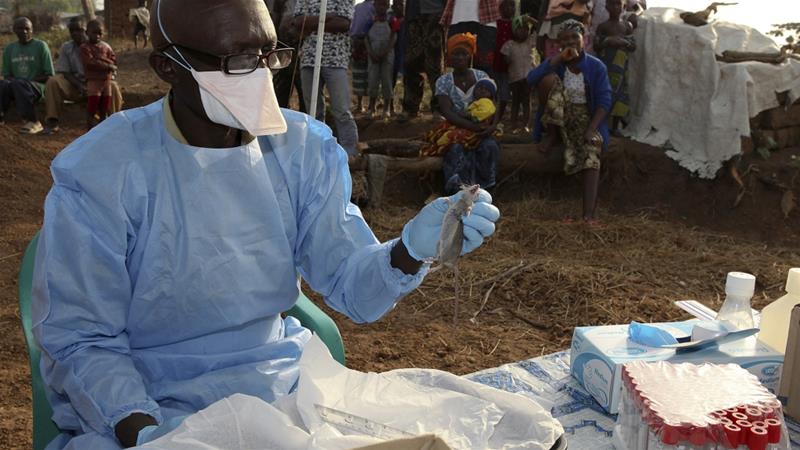
The majority of cases of Lassa fever in Nigeria are caused by Mastromy rats and happen during the dry season that takes place from December to April. During the wet season, from May to June, a new population of Mastromy rats, which are not immune to the disease, are born to spread Lassa fever.

2. The 2020 outbreak

Nigerian health professionals began registering cases of Lassa fever in Nigeria at the beginning of January 2020 and the epidemic is still ongoing. The Nigerian National Centre for Disease Control (NCDC) releases regular updates, which allow us to assess the deadliness and size of the epidemic.


To date, the number of people infected with Lassa fever has been estimated to be around 600 according to the official sources. However, unofficial estimates tend to place the overall number of infected patients around 2,000, which shows the situation to be more serious than everyone thought.
The death toll of Lassa fever by the beginning of this week is over 100 people. The difficulty of diagnosing and treating Lassa fever is that in about 80% of cases, the disease does not display any symptoms. In other cases, patients experience headache, fever, abdominal pain, muscle ache, mouth ulcers, sore throat, and haemorrhaging under the skin. In the most severe cases of Lassa fever, kidney and heart failures are also potential outcomes.

3. The prevention

Originally, people are infected with Lassa fever by contacting household items contaminated with the urine or faeces of rodents infected with the disease. After that, infected people can transmit their disease through bodily fluids released in close proximity to healthy individuals.


The only effective treatment for Lassa fever is a drug called ribavirin, but it is only effective when Lassa fever is diagnosed in its early stages and correctly identified by the laboratory. Right now, there are only 5 laboratories in Nigeria capable of diagnosing Lassa fever, which means it’s best to follow some precautionary measures to avoid being infected instead of looking for treatment once you have Lassa fever.
There are two primary ways for Lassa fever to be transmitted, through rodents and through infected patients, which is why there are two groups of precautionary measures to follow:
  • Protecting your household from rats is the most important part. Placing traps around the house may not be particularly effective, as rats may still be able to enter your home. The key here is to never make any food accessible to them. Keep all food in rat-proof containers, fridge, and other areas where rats cannot reach, and the rodents will then be discouraged from entering your home.
  • If someone in your family is infected with Lassa fever and you are their caretaker, the infected person must be isolated from healthy individuals. The caretaker must wear protective clothes and masks. Medical equipment must be sterilized and household objects must be disinfected. When you’re out in public, stay away from the people who have obvious signs of any infectious disease. Wash your hands with soap every time you come home or finish doing a household task outside.


source: jiji.ng

List Of Politicians And Celebrities Who Have Tested Positive To Coronavirus 2020


Contents
  • 1. Tom Hanks and Rita Wilson
  • 2. Sophie Trudeau
  • 3. Kevin Durant
  • 4. Idris Elba
  • 5. Prince Albert
  • 6. Manu Dibango
  • 7. Burkina Faso ministers
  • 8. Plácido Domingo
  • 9. Kristofer Hivju
  • 10. Rudy Gobert
Coronavirus, or COVID-2019, continues being one of the most discussed topics on the planet. With millions of people being on lockdown and hundreds of thousands of infected patients, the rich and famous of this world are also not immune to the disease. Here is a list of celebrities and politicians who have been infected with COVID-2019.

1. Tom Hanks and Rita Wilson

One of the world’s most beloved actors and his equally talented wife became one of the first celebrities who were officially diagnosed with coronavirus. The couple received their diagnosis on March 11 and were quarantined in the Golden Coast hospital, Australia.


2. Sophie Trudeau

The wife of the Prime Minister of Canada, Justin Trudeau, was diagnosed with coronavirus on March 12. She is only showing mild symptoms and is feeling well, while her husband shows no symptoms and has not been tested. The couple remains in self-isolation in Ottawa with Justin Trudeau working from home.

3. Kevin Durant

One of the most acclaimed NBA players has revealed that he is one of the four Brooklyn Nets players who have tested positive for COVID-2019. Kevin Durant did not describe the severity of his symptoms, but reminded everyone to follow the quarantine rules and hope for the best.

4. Idris Elba

Idris Elba revealed his coronavirus diagnoses on March 16 on Twitter. The actor said he was not showing any symptoms but decided to get tested after learning he was in contact with an infected person. Idris and his wife Sabrina Dhowre, who has not been tested yet, remain in self-isolation and encourage fans to do the same.

5. Prince Albert

The positive test of Prince Albert II of Monaco for coronavirus was announced in an official statement last Thursday. Although Prince Albert is infected with coronavirus, his condition is believed to be mild and he continues working from home – the Royal Palace, to be precise.


6. Manu Dibango

The Cameroonian jazz musician who is one of the most respected artists in his genre, was admitted to the hospital after testing positively for coronavirus. Manu Dibango’s team revealed that the 86-year old musician is on the way to recovery and is currently resting.

7. Burkina Faso ministers

As of now, four ministers of Burkina Faso have revealed their COVID-2019 diagnosis. The infected ministers are Stanislas Ouaro, Minister of Education, Alpha Barry, Foreign Minister, Oumarou Idani, Minister of Mines, and Simeon Sawadogo, the Interior Minister. Those are some of the few African officials who have tested positive to coronavirus.

8. Plácido Domingo

The legend of the international opera scene, Plácido Domingo, said it was his moral duty to reveal his coronavirus diagnosis. The singer said he experienced cough and fever, and that is why he decided to get tested. Currently, Plácido Domingo is in self-isolation with his family.

9. Kristofer Hivju

On March 16, the star of Game of Thrones uploaded a post to Instagram where he revealed that he tested positive for coronavirus. He said he only showed mild symptoms and should recover soon enough, and urged his fans to maintain the rules of social distances to limit the spreading of the disease.

10. Rudy Gobert

Rudy Gobert, the star player of the Utah Jazz basketball team, was diagnosed with COVID-19 last week. Prior to receiving the diagnosis, the basketball player said he did not fear the disease and made sure to touch all the microphones at the press conference on March 9, which caused a lot of criticism from the fans, reporters, and health officials.
source:jiji.ng

How To Produce Hand Sanitizer At Home 2020

Contents
  • 1. What you’ll need
  • 2. How to make hand sanitizer
  • 3. How to use hand sanitizer
Hand sanitizer became one of the most valuable commodities around the world since the beginning of the coronavirus outbreak. Unfortunately, hand sanitizer is also very hard to buy these days, as most stores ran out of the product. Here is how you can make your own hand sanitizer in any quantity at home.

1. What you’ll need

The main ingredient in a homemade hand sanitizer is alcohol – it is the compound responsible for killing the germs and preventing the spreading fo the disease. However, rubbing your hands with pure alcohol can make your skin very dry and irritated. To make a small batch of hand sanitizer, you will need the following ingredients:


  • 2/3 cup of 99% rubbing alcohol
  • 1/3 cup of aloe vera gel
  • Several drops of your preferred essential oil
Additionally, you will need a few pieces of equipment that you likely already have at home: a mixing bowl and spoon, a funnel, and an empty bottle – you can use a leftover bottle from old hand sanitizers, skin care products, or liquid soap.
Ideally, the bottle for your hand sanitizer will have a pump, but even if not, a regular bottle where the product will pour from a small opening should also be completely fine.

2. How to make hand sanitizer

The process of making hand sanitizer at home is much easier than finding hand sanitizer for sale or, sometimes, sourcing the ingredients for homemade hand sanitizer. The production of hand sanitizer takes just two easy steps:


  1. Measure and pour the rubbing alcohol, aloe vera gel, and 8 to 10 drops of essential oil into a mixing bowl. Mix well with a spoon to achieve a smooth consistency.
  2. Pour the mixture into a bottle, attach the lid, and use as a regular hand sanitizer.

3. How to use hand sanitizer

When you prepare a big batch of hand sanitizer, your first instinct may be to use it all the time and even instead of hand soap. However, there are a few important rules to follow with using hand sanitizer if you want to minimize the possibility of getting infected:


  1. When your hands are very dirty and greasy – for example, if you have been recently handling food or soil – hand sanitizer may not be particularly effective. If possible, you should try washing your hands with soap or cleaning them with wet wipes before applying sanitizer.
  2. Apply a few drops of hand sanitizer to the palms of your hands. Rub your hands on one another for up to 30 seconds, covering every part of your hands, including the spaces between your fingers.
  3. If you have a sensitive task to perform – for example, before handing out food or giving medical care – the best option is to first wash your hands with high-quality soap for 20 seconds and then applying hand sanitizer. However, if you often follow that routine, your hands can become dry very quickly. That is why you may need to apply hand cream whenever possible to heal the skin on your hands.
  4. Hand sanitizer can also be used to disinfect certain objects – for example, the doorknobs and electric switches in your home, especially the ones you inevitably touch after coming home before properly washing your hands.


News: Jaguars and underpants: when Olympic torch relays go wrong

source: AFP

Diario do Amazonas/AFP / Jair Araujo The jaguar later escaped

From a jaguar on the loose to an elaborate hoax involving burning underwear, the Olympic torch relay has had its fair share of mishaps.

As Japan downscales the 2020 relay due to concerns over the new coronavirus, AFP looks back at some of the trials and tribulations of the event, first run ahead of the Berlin Olympics in 1936.

- Flaming underpants -

Probably the most memorable stunt surrounding the torch relay came in 1956 when an Australian student named Barry Larkin fooled crowds with a homemade torch topped by burning underpants.

Larkin managed to get his torch -- a wooden chair leg crowned with a metal pudding container holding the fiery underwear -- up the stairs of Sydney's Town Hall and deliver it to city mayor Pat Hills, cheered on by tens of thousands.

The university student even arranged his own fake motorcycle escort but when he started to run out from the crowd, he found himself flanked by genuine police outriders as the crowd closed in around him.

The mayor sensed nothing wrong as he took the flame from Larkin, giving the first part of his prepared remarks before realising something was amiss.

- Jaguar on the run -

A 17-year-old jaguar named Juma was lined up for photos as the torch passed through the Amazon in northern Brazil during the relay for the Rio Olympics in 2016.

But Juma escaped its handlers and four tranquilliser darts fired at the animal failed to slow it down.

After it threatened a vet, soldiers opened fire on the jaguar -- in danger of extinction and the symbol of the Amazon -- and shot it dead.

- Fried doves -

The climax of the relay -- the lighting of the Olympic cauldron -- has provided some unforgettable moments such as Mohammad Ali trembling to light it as he suffered from Parkinson's disease and an archer firing a flame into it in Barcelona.


AFP/File / ROMEO GACAD Australian sporting icon Cathy Freeman was left hanging for several long minutes when the ramp failed to move


But things have not always gone smoothly. The most grisly blunder came in Seoul in 1988 when dozens of doves released earlier in the opening ceremony alighted on the cauldron.

When the flame was lit, several of the birds were incinerated to the horror of watching spectators.

Legendary Australian athlete Cathy Freeman was also left hanging at the Sydney opening ceremony when a platform supposed to rise after the lighting of the flame got stuck for around three minutes.

"We've got a slight technical hitch. Nothing that can't be fixed," said one reassuring voice in her earpiece. "F---, f---, f---, f---," screamed another.

- Protests aplenty -

The torch relay has been the target of several protests, most notably during the run-up to the Beijing Olympics as demonstrators took China to task over its Tibet policy.

Protests started even when the flame was lit in ancient Olympia and dogged the relay throughout its journey to China, notably as it passed through London, Paris and San Francisco.


AFP/File / YASUYOSHI CHIBA The torch relay for Rio was accompanied by heavy security

In Japan, monks at an ancient Buddhist temple pulled out of hosting a torch ceremony because of the Chinese crackdown in Tibet.

The relay ahead of Sydney 2000 also suffered from isolated protests. One spectator wrestled it out of the hands of former world surfing champion Tom Carroll as he travelled along the New South Wales south coast and tried to hurl it into Kiama harbour before being wrestled to the ground.

A high-school student also tried to put out the torch with a fire extinguisher.

- Lighting hiccups -

Although the Olympic flame is supposed to be eternal, problems with the lighting mechanism have caused it to go out several times.

In 2012, officials had to hastily relight the flame from a stand-by "mother flame" when it vanished from the side of Paralympic badminton star David Follett's wheelchair in blustery weather in southwest England.

Olympic torches made by a well-known Russian missile manufacturer for the Sochi Winter Games in 2014 were dogged with problems, going out several times and discretely relit by secret service officers.

- Inauspicious start -

The Olympic torch has been into space, deep underwater and even scaled Mount Everest.


HO/AFP/File / CORR The Berlin 1936 Olympics will always be remembered for Jesse Owens


As the Olympic museum website puts it: "Over the last 80 years, the Olympic torch has been carried by hundreds of thousands of people and travelled on every imaginable form of transport, though mostly by foot."

The flame made its first appearance in modern times at Amsterdam 1928.

But the first relay took place in Berlin 1936, forever known for the heroics of sprinter Jesse Owens but also tainted by its hosting by Nazi Germany.

News: US Olympic officials say Tokyo postponement 'most promising path'


source: AFP


 GETTY IMAGES NORTH AMERICA/AFP / MATTHEW STOCKMAN US Olympic chiefs said a majority of US athletes now favour a postponement of the Tokyo Olympics

The US Olympic and Paralympic Committee voiced support for delaying the Tokyo Games on Monday after a survey showed an overwhelming majority of American athletes backed a postponement.

While stopping short of demanding that the July 24-August 9 Games be pushed back in the face of the coronavirus pandemic, US Olympic chiefs Sarah Hirshland and Susanne Lyons said information gleaned in the survey showed "it's more clear than ever that the path toward postponement is the most promising."

"We encourage the International Olympic Committee to take all needed steps to ensure the Games can be conducted under safe and fair conditions for all competitors," the USOPC said in a carefully worded statement.

The USOPC said 1,780 US athletes responded to the survey, and 68 percent said they did not think the Games could be fairly contested as scheduled.

"Our most important conclusion from this broad athlete response is that even if the current significant health concerns could be alleviated by late summer, the enormous disruptions to the training environment, doping controls and qualification process can't be overcome in a satisfactory manner," the USOPC said adding that officials look forward to feedback and direction from the IOC "and stand ready to work in support of Team USA and in full cooperation with the global community."

The findings come amid mounting international demands for a postponement of the Olympics.

The US national governing bodies for athletics, swimming and gymnastics have all called for a postponement.

Canadian Olympic officials said Sunday they would not send a team to Tokyo this summer, urging the IOC to postpone until 2021.

- Training 'severely impacted' -

Australian Olympic officials said "it was clear" the Tokyo Games could not go ahead as scheduled and told their athletes to instead prepare for the event in 2021.

The USOPC again noted on Monday that postponing would not be a solution for all Tokyo hopefuls.

But 38 hours after issuing a survey to some 4,000 American Olympic and Paralympic hopefuls and receiving more than 1,780 responses it was clear that measures in pace to combat coronavirus spread had severely affected the training of most athletes.

Nearly 65 percent of respondents said their training had been severely impacted and 25 percent said they cannot train at all.

While 87 percent said local regulations on social distancing and self-isolating had affected their ability to train, less than 10 percent reported they could continue to train without any adverse impact.

Nearly two-thirds of those surveyed said they thought continuing to train would or might put their health at risk.

More than 900 athletes shared additional thoughts, with some backing a quick decision on the fate of the Games, and some indicating they thought it was too soon to make a decision.

Concerns raised by athletes included maintaining mental health, worries about being able to continue to compete if the Games are postponed and opinions on how long a postponement is feasible.

"We are now confident that we have heard a wide range of viewpoints and understand the diversity of challenges our athletes face," the USOPC said. "We regret that there is no outcome that can solve all the concerns we face."

News : 1964 Olympic torchbearer frets about virus-hit Olympic relay

source: AFP

AFP / Behrouz MEHRI Kazuo Goto said he was 'thrilled' to be part of the 1964 Olympic movement

Even though it was 56 years ago, Kazuo Goto still vividly remembers his pride as he carried the Olympic flame on the last day of the torch relay when Tokyo hosted the Games in 1964.

But with the coronavirus threatening the torch relay and even the Olympic Games themselves, the 73-year-old believes the 2020 version should be scrapped, as torchbearers need to be able to carry the flame with a "clear conscience."

"We are not in a position where we can go ahead with the torch relay as planned," Goto, a former insurance broker, told AFP in an interview at his house in Yokosuka, southwest of Tokyo.

The white-haired former torchbearer recalled that he was "thrilled" to be part of the 1964 Olympic movement, which symbolised Japan's rise from the ashes of World War II to an economic and technological powerhouse.

And while treasuring his "emotional" memories of the event, he said he was now puzzled with organisers still going ahead with the 2020 Olympic torch relay while the outbreak of the new coronavirus has thrown the entire Tokyo Games into doubt.


AFP / Behrouz MEHRI Goto said he feels sorry for the 10,000 bearers of the 2020 flame


Plugging ahead regardless seems to be "egoism" on the part of organisers, he charged.

Goto questioned what would happen if the torch relay begins but the Olympics are postponed in the middle of the event -- a fairly likely scenario with the International Olympic Committee giving itself four weeks to make a decision.

"Do they let them run and then they say they can't hold the Olympics?" he asked.

"I ran with my head high and chest out under the sunshine, representing my country. That's the significance," Goto said, cradling the torch he carried in 1964.

"It's best for torchbearers to run with a crystal-clear conscience."

- 'Hope lights our way' -

One prominent torchbearer, US-based Japanese football star Nahomi Kawasumi, has already pulled out of the relay, saying she did not want to risk infecting anyone given the number of cases is much higher in the US than in Japan.

The nationwide torch relay is due to begin on Thursday, starting from the J-Village sports complex in Fukushima that was used as a base for workers during the 2011 earthquake, tsunami and nuclear disaster.


AFP / Behrouz MEHRI Even though it was 56 years ago, Kazuo Goto still vividly remembers his pride as he carried the Olympic flame

But the coronavirus has already played havoc with the relay, forcing organisers to scale back celebrations and warn fans not to congregate in crowds along the route.

In what organisers described as a "heartbreaking" decision, they kept away some 200 children from welcoming the torch off the plane from Greece.

Goto said he feels sorry for the 10,000 bearers of the 2020 flame, whose big moment may be dampened by sparse crowds and who may run with mixed feelings.

"They are supposed to run with well-wishers. The torch relay is an integral part of the Olympics," he said.

The theme of the torch relay is "hope lights our way" and former Olympic judo champion Saori Yoshida, who lit a ceremonial cauldron with the flame when it arrived from Greece, said she wanted it to brighten people's lives in the current dark times.

"Although it's a tough time, I hope we can give hope and cheer to a lot of people with the Olympic flame relay," she said.

Isamu Miyagi, who was the first torchbearer at the 1964 Olympics and plans to run again this year, said he still believes "it's worth running" with the flame.


AFP / ARIS MESSINIS The torch relay is an integral part of the Games


"I'm worried but it is beyond our control as to whether we can go ahead with the relay," said Miyagi, scheduled to run on May 3 in the southern island of Okinawa.

"I still hope it happens because the Olympic flame is the flame to light up the spirits of people fighting hardship," the 77-year-old told AFP in a phone interview.

"That's why we need to do the flame relay now," he said.

"I will keep preparing to carry the flame no matter what."

News: Fear in New York, but Trump says coronavirus restrictions could ease soon

source: AFP

AFP / Angela Weiss New York City has now seen more than 12,000 confirmed cases and almost 100 deaths in the outbreak

Anxiety ratcheted up Monday across an eerily deserted New York, America's coronavirus epicenter, but President Donald Trump said he'd soon call for lifting the lockdown in some parts of the country.

Trump -- who faces reelection in November and is keen to avoid extended economic damage -- told reporters he would be "opening up our country to business because our country was meant to be open."

The relaxation could be announced early next week when a 15-day period recommending tight restrictions on social distancing expires, he said, stressing that governors would make final decisions in their own states.

Health officials and state governors dealing with the worst outbreaks have said they expect restrictions will have to continue for some time -- and New York's mayor called for a nationwide lockdown.

As the number of deaths in the United States from COVID-19 soared to 560, with almost 44,000 declared cases, the Big Apple found itself the US bullseye of the global pandemic.


AFP / Bryan R. Smith New York Governor Andrew Cuomo announces plans to convert the Jacob Javits Center on Manhattan’s West Side into a field hospital


With millions of residents ordered to stay home and non-essential businesses and schools closed, the city that never sleeps is bedding down for an uncertain slumber.

For Christian Hofer, and his wife and two young children, the hardest is not knowing how long the unprecedented measures are going to last.

"It goes from a range of emotions, from feeling very nervous about the situation to feeling like how absurd it is," the 42-year-old Wall Street trader told AFP.

New York City has now seen more than 12,000 confirmed cases and almost 100 deaths in the outbreak, which first appeared in the United States in Washington state.


AFP / Angela Weiss With only essential workers headed to work in New York, normally packed subway cars trundled along close to empty

With only essential workers, such as pharmacists, grocery store workers, nurses and doctors, headed to work Monday, rush hour in the city was more like a trickle of traffic.

New York's yellow cabs were out but passengers appeared few and far between with sidewalks virtually deserted. Underground, normally packed subway cars trundled along close to empty.

- 'Scared' -

"I'm scared for me and patients that this could go on" for months, said Lauren, a psychologist who declined to give her surname.

Anxiety and depression "all gets heightened at a time like this," she added, one of the few souls out and about on Manhattan's Upper East Side.

On the New York Stock Exchange, the opening bell, usually greeted by cheering and clapping, was met with silence as the first day with no floor trading took place.


AFP / Angela Weiss Mayor Bill de Blasio warned New York was just at "the beginning" of dealing with the epidemic


Only electronic trading occurred as stocks plunged deep into the red before recovering somewhat, with both the Dow and the S&P 500 closing down around three percent.

In Congress, efforts to advance a nearly two-trillion-dollar rescue of the economy failed for a second straight day after Democrats said the Republican proposal insufficiently protected workers.

Trump said he wanted to get restrictions on movement lifted where possible, so that people can get back to work. He acknowledged that medical advisors focused more on public health than the economy may not agree with his decision.

"The doctors, if it were up to them, they may say 'let's keep it shut down, let's shut down the entire world,'" said Trump.

"We can't do that and you can't do that with the country especially the number one economy anywhere in the world by far."

- Worse to come -

Mayor Bill de Blasio warned New York was just at "the beginning" of dealing with the pandemic as soldiers from the National Guard began converting a convention center into a facility with hospital beds.

"It's going to be bad this week, it's going to be worse the following week," he said.


AFP / Robyn Beck A police officer closes access to the Santa Monica pier in Santa Monica, California as around a third of Americans live under various phases of lockdown

De Blasio added that the city's overwhelmed public hospitals have only enough medical supplies to last the week and pleaded with the federal government to speed up production.

"I literally want to see hundreds of ventilators, I want to see first hundreds of thousands and millions of masks.

"If that doesn't come in starting this week, we will get to a point where people can't be saved who could have been saved," he said.

He said Trump should be calling a nationwide lockdown similar to those introduced locally in New York, California and Illinois. Trump has ruled that out.

Around a third of Americans are living under various phases of lockdown.

On Monday, Washington state, Michigan and New Mexico became the latest to sign a "shelter-in-place" order, as Ohio's and Louisiana's took effect.

In California, already under orders to stay home, Governor Gavin Newsom tightened the lockdown to shut parking lots at beaches and parks after tens of thousands flouted social distancing rules.

US Surgeon General Jerome Adams warned that case numbers across America were going to get worse before they get better.

"We really need everyone to understand this is serious, to lean into what they can do to flatten the curve."

pdh-tu-cat-sms-amz/it/axn

News: Spanish soldiers find bodies in retirement homes


source: AFP


 AFP / PIERRE-PHILIPPE MARCOU The ice rink at the Palacio de Hielo, or Ice Palace, shopping centre in Madrid was made into a morgue to deal with a surge in deaths in the capital

Spanish soldiers deployed to help fight the new coronavirus outbreak have found elderly patients abandoned, and sometimes dead, at retirement homes, as an ice rink inside a Madrid shopping mall was turned into a temporary morgue to cope with a surge in cases.

The army has been charged with helping to disinfect retirement homes in Spain, one of the countries worst hit by the pandemic. Dozens of deaths from COVID-19 have been recorded at facilities across the country.

"We are going to be strict and inflexible when dealing with the way old people are treated in these residences," Defence Minister Margarita Robles said in an interview with private television channel Telecinco.

"The army, during certain visits, found some old people completely abandoned, sometimes even dead in their beds," she added.

An investigation has been launched, the general prosecutor announced.

The coronavirus death toll in Spain surged to 2,182 on Monday after 462 people died within 24 hours, according to health ministry figures.


AFP / PIERRE-PHILIPPE MARCOU Inhabitants applaud to pay tribute to medical staff in Madrid during a national lockdown


Meanwhile, the ice rink at the Palacio de Hielo, or Ice Palace, shopping centre in Madrid was turned into a temporary morgue to deal with a surge in deaths in the capital, a spokeswoman for Madrid city hall told AFP.

Earlier, the city hall said the city's 14 public cemeteries would stop accepting more bodies because staff there did not have adequate protective gear.

The improvised morgue would start to be used "in the coming hours," the regional government of Madrid said.

"This is a temporary and exceptional measure which aims to mitigate the pain of the family members of the victims and the situation hospitals in Madrid are facing."

A nearby congress centre has been converted into a field hospital for coronavirus patients that will have a total of 5,500 beds.

The elderly are especially vulnerable in the global pandemic and officials around the world are increasingly calling for extreme measures to safeguard them.

Retirement homes are "an absolute priority for the government", Health Minister Salvador Illa told a press conference.

"We will exercise the most intensive monitoring of these centres."

Under coronavirus protocols, health workers have been instructed to leave bodies in place in suspected COVID-19 deaths until the arrival of a doctor. But given the upsurge in deaths the delay can be lengthy.

News: Britain in lockdown as WHO warns pandemic 'accelerating' 2020


source: AFP


 AFP / Paul ELLIS "Stay at home," Prime Minister Boris Johnson said in a televised address to the nation, as he unveiled unprecedented peacetime measures

Britain was under lockdown Tuesday, its population joining around 1.7 billion people around the globe ordered to stay indoors to curb the "accelerating" spread of the coronavirus.

Across Europe, Asia, North America, the Middle East and parts of Africa, governments have told their citizens to remain at home as they grapple with a disease that has claimed thousands of lives -- and shows no signs of slowing.

But in a sign of hope, China's central Hubei province, where the deadly coronavirus first emerged late last year, is to lift travel curbs after two months under lockdown.

The global shutdown continued to throw up horrifying tales; soldiers in Spain tasked with fighting the outbreak reported finding abandoned elderly people -- some dead -- at retirement homes.

And on the deserted streets of New York, one psychologist who ventured out voiced fears over the long-term mental health effects on everyone affected.


 AFP / One week of new COVID-19 cases


"I'm scared for me and patients that this could go on" for months, said Lauren, who declined to give her surname.

Anxiety and depression "all gets heightened at a time like this," she added.

The financial impact of economies grinding to a halt continued to unnerve policymakers, who opened the spigots and flooded the markets with yet more cash -- their latest effort to keep the wheels turning.

In the United States, the Federal Reserve unveiled an unprecedented bond-buying programme, in a move not seen since the global financial crisis more than a decade ago.

The Fed, which has already slashed interest rates to record lows, said it will buy unlimited amounts of Treasury debt and take steps to lend directly to small and medium-sized firms hammered by a countrywide lockdown.

Asian markets cheered the news, with Tokyo, Hong Kong and Seoul rocketing in their latest rollercoaster session.


AFP / Bryan R. Smith Members of the Army National Guard deploy at New York's Jacob Javits Center as New York Governor Andrew Cuomo announces plans to convert the center into a field hospital

That upswing came despite US politicians' failure to sign off on a $2 trillion package that President Donald Trump says is aimed at supporting ailing enterprises and helicoptering cash to American families.

His opponents say the bill is too heavily weighted to bailing out big business.

The British government, which has faced accusations it dithered over the health crisis and needlessly allowed schools to remain open far longer than European counterparts, came into line on Monday.

Prime Minister Boris Johnson ordered a three-week shutdown of "non-essential" shops and services and banned gatherings of more than two people.

"Stay at home," Johnson said in a televised address, as he unveiled unprecedented peacetime measures after the national death toll climbed to 335.


AFP / Angela Weiss Millions of residents have been ordered to stay at home in New York and all non-essential businesses have been shut and schools closed


The announcement came after crowds of people were seen enjoying weekend sunshine in parks and countryside, prompting calls for tougher action.

World Health Organization chief Tedros Adhanom Ghebreyesus warned that the global pandemic was clearly "accelerating."

The number of coronavirus deaths has topped 16,500, with more than 378,000 declared infections in 174 countries and territories.

Tedros said it took 67 days from the beginning of the outbreak in China in December for the virus to infect the first 100,000 people worldwide.

In comparison, it required only 11 days for the second 100,000 cases and just four days for the third 100,000, he said.


AFP / Piero CRUCIATTI Italy, with 6,077 deaths, now has more fatalities than China but the number of single-day deaths was slightly down on Monday, offering a glimmer of hope it may finally be turning a corner

Tedros acknowledged that many countries were struggling to take more aggressive measures because of a lack of resources but said "we are not helpless bystanders.

"We can change the trajectory of this pandemic," he said.

There was a glimmer of hope Monday in figures from Italy, the European ground zero of COVID-19.

New infections in the continent's hardest-hit country dipped to just shy of 5,000, down from over 6,500 the day before.


AFP / Michele Spatari South Africa announced a three-week lockdown "to avoid a human catastrophe" with soldiers patrolling the streets to ensure compliance


Its daily death toll also fell slightly, although cumulatively the country has recorded more than 6,000 fatalities, far-exceeding even that of China, where the disease emerged late last year.

In the United States, hard-hit New York city was under lockdown, with its usual logjam commute now just a trickle of pharmacists, grocery store workers and medical staff.

But Trump -- who faces re-election in November and is keen to avoid extended economic damage in the US -- told reporters he would soon be "opening up our country to business because our country was meant to be open."

As war-ravaged Syria announced its first coronavirus case, UN Secretary-General Antonio Guterres appealed for a worldwide ceasefire to protect the vulnerable in conflict zones.

"The fury of the virus illustrates the folly of war," he said.

And with major cultural and sporting events already wiped off the calendar, there were mounting calls to postpone the Tokyo Olympics, Japan's prime minister having admitted Monday that a delay could be "inevitable."

burs-hg/axn

Finance Manager Job at Technoton limited Technoton limited 2020


Lagos
Technoton Limited is your reliable Engineering and Technical Services firm providing world-class services to clients in Nigeria. We are experts in HVAC solutions, fire protection, power distribution, refrigeration, equipment maintenance, and sales of spare parts and accessories.
We are recruiting to fill the position below:
Job Position: Finance Manager
Job Location: Lagos
Job Role
  • Candidate will manage the financial resources of the company, she is responsible for the budget planning, and supports the executive management team by offering insights and financial advice that will allow them to make the best business decisions for the company.
Job Duties
  • Collecting, interpreting and reviewing financial information
  • Predicting future financial trends
  • Reporting to management and stakeholders, and providing advice how the company and future business decisions might be impacted
  • Producing financial reports related to budgets, account payables, account receivables, expenses etc.
  • Developing long-term business plans based on these reports
  • Reviewing, monitoring and managing budgets
  • Developing strategies that work to minimise financial risk
  • Analysing market trends and competitors
Scope of operations including but not limited to the following:
  • Benefits Administration
  • Performance Management
  • Compensation and Wage Structure
  • Organization, Coaching
  • Communication Processes
  • Developing and managing financial systems/models
  • Carrying out business modelling and risk assessments
  • Producing long-term business plans
  • Undertaking research into pricing, competitors and factors affecting performance
Qualifications and required skills
  • Female
  • 30 - 45 years
  • Minimum of first Degree (B.Sc / HND) in any discipline
  • Minimum of ten (10) years post qualification experience - post graduation not counting NYSC with at least 5 of those years in a Financial Services company.
  • An analytical mind
  • Negotiation skills and the ability to develop strong working relationships
  • Commercial and business awareness
  • Good communication skills - both written and verbal
  • A keen eye for detail and desire to probe further into data
  • Ability to stick to time constraints.
Method of Application
Interested and qualified candidates should forward their CV to: careers@technoton-ltd.com using the position as subject of email.

COVID-19: Declare emergency now


source: punchng.com
FOR Nigeria, which has just recorded its first novel coronavirus death, the tragic footprints of the global pandemic have become inescapable. Not surprisingly, tension escalated around the country on Monday after the Nigeria Centre for Disease Control announced the death of a 67-year-old national, whom it said contracted the highly contagious virus during his medical sojourn in the United Kingdom. His death and the rapid increase in the number of infections at the weekend are a wake-up call to the Nigerian authorities at all levels that the country has a long battle in its hands in its bid to contain the human and economic toll of the fast-spreading contagion. The Major General Muhammadu Buhari (retd.) regime should immediately declare an emergency in order to roll out extraordinary measures to fight the pandemic.

Nigerians should not be fooled. The coronavirus pandemic is deadly serious, and it is everyone’s problem. But, until now, the official response has been tepid and disappointing. Although all the indicators that the pandemic might grow worse were vividly present, particularly after the index case of the Italian traveller hit the country on February 27, the authorities still acted lethargically. Nevertheless, from the index case, who was discharged on March 22, the cases of infection have shot up alarmingly, reaching 36 on Monday, according to the NCDC.

Last week was frightening. After a seeming lull, the number reached 12 on March 19, mostly in Lagos. Health officials said these were mainly people who flew into the country from Europe and the United States. The cases inched up to 21 on March 21, from where it spread to Ekiti State, the Federal Capital Territory, Abuja and Ona Ara Local Government Area in Oyo State. Disturbingly, a case was confirmed in Edo State on Monday, bringing the total to 36. The scope of infections may be far higher than what is reported because of slow and inefficient contact tracing process.
 
Being the state with most cases, because it has been more rigorous in conducting tests, Lagos took the lead in curtailing the spread of Covid-19, the medical name of the pandemic that exploded in Wuhan, China, in December 2019. It shut down schools, a significant development that was swiftly copied by other states and the Federal Government. Lagos restricted social gathering to 20 people to promote the appropriate social distancing recommended by the World Health Organisation. Additionally, the state directed civil servants below grade level 13 to work from home.


The problem with these measures is that they are coming in piecemeal, and it seems there is no nationwide coordination. For instance, it took the Federal Government until March 23 to shut the airports to international travellers. Bearing in mind that Italy, the United States and Britain had high cases of COVID-19 for weeks, the action took too long in coming.
This is one time that the notorious inefficiency, complacency and sheer irresponsibility of officialdom should not be allowed to inflict avoidable carnage. Already, all these are at play: the slow response in restricting flights from afflicted countries and setting up testing and treatment centres allowed the index case to land and enter the local stage of infection.
Most unpardonable is the usual failure to enforce laws, orders and regulations. In Lagos and Ogun states, as well as the FCT where the authorities had separately ordered the closure of schools and forbidden gatherings of more than 50 persons, many faith-based organisations flouted the order. News outlets reported that many churches held their usual Sunday morning services, despite the police disruption of several other such gatherings. This is a flagrant failure of governance. The claim of “80 per cent compliance” by the Ogun State task force head is unacceptable.
Nigeria has every reason to be deeply worried with its broken health care system. Nothing really works here, aided by official corruption, which erodes the little funds available for health services. In the 2020 budget of N10.59 trillion, the health budget accounts for just 4.14 per cent or N427.3billion.
Medical personnel, especially doctors, are in short supply. Their strikes for improved conditions of service are routine. Frequently, they flee to Europe, America, Saudi Arabia and other countries where the remuneration is attractive, medical equipment available and the working environment conducive to service delivery. Nigeria, according to the Nigerian Medical Association, has a ratio of one doctor to between 10,000 and 22,000 patients, as against WHO’s recommended ratio of 1:600. This is compounded by the weak capacity to produce pharmaceuticals at a time countries, including the UK, have placed restrictions on medical materials. Israel has directed its spy agencies to embark on an undercover purchase of testing kits from abroad.

There are adequate lessons to draw from other countries. Singapore, Taiwan and Hong Kong have had to fall back on their experiences to tackle the COVID-19 pandemic, while Nigeria very quickly forgot about the experience of Ebola Virus. Even contrary to WHO’s advice, by February 1, Taiwan, Singapore and Hong Kong had already started implementing travel restrictions on passengers coming from mainland China. Sadly, up till last week, the Nigerian government was still dilly-dallying on that particular step. The Asian trio took the action despite the fact that China remains their biggest trading partner.

Despite being the third country to report cases of COVID-19 outside of China and, at a point, having the highest number of cases outside of China, Singapore, through a combination of strict contact tracing and testing, was able to track down almost all the cases of the disease and deal with them, working round the clock. In Hong Kong, social distancing was strictly enforced and schools closed even up to the forthcoming Easter period. Measures such as hand sanitising that had been in use during the SARS period were reintroduced. In Germany, the government has limited the number of people allowed to gather outside to just two. Failure to comply would result in a response from the state.

What is to be done immediately? The government should set up an efficient emergency response team with a large infusion of experts. Typically, Buhari has been unimaginative and aloof as COVID-19 spreads; the committee to assess its impact on the economy is not enough. By now, there should have been daily briefings by the team at the federal, state and local levels; the President should be visible.

As coronavirus spreads, tragedy looms with the country having the highest tuberculosis burden in Africa and ranked sixth in the world. TB, cardiovascular, asthma, diabetes, kidney patients and those with other underlying chronic health conditions are most vulnerable to coronavirus. The elderly and people with severe chronic illnesses of any age, prolonged respiratory illnesses, autoimmune diseases and malignant diseases are seriously at risk of infection. This risk population should be made to observe self-isolation.

This is not the time for the President to delegate to his narrow circle as usual; it is a time for him to take charge as the heads of government across the world have done. Everyone should be alarmed: Nigeria has a large population with large urban centres such as Lagos and Kano, a poor public health system and inefficient governance. The required coordination from Buhari has been signally absent.
Restrictions and quarantine should be tightened and strictly enforced by all tiers of government. The authorities should make examples of those who organise gatherings above the stipulated numbers by arresting and prosecuting them. Sadly, some people are irresponsibly delinking COVID-19 from science. Religious leaders who have great influence on public opinion should be discouraged from making claims that are not scientific. Relevant health authorities should monitor and issue clarifications on misinformation regarding the disease. No one is above the law; individuals, organisations and religious groups that endanger public health should be duly prosecuted.

Not much is known about COVID-19 as experts are still gathering information about the virus. All hands should be at the plough; apart from mobilising all health professionals like Lagos and many countries who have recalled retired care givers, student doctors and other volunteers, other states and the government should follow and mobilise all segments of the society to confront this plague.

Popular Posts

Contact Form

Name

Email *

Message *