As Kim Jong Un’s year-end deadline nears, the stalemate continues
Still no deal in sight as Washington waits for North Korea’s next move
SHARE
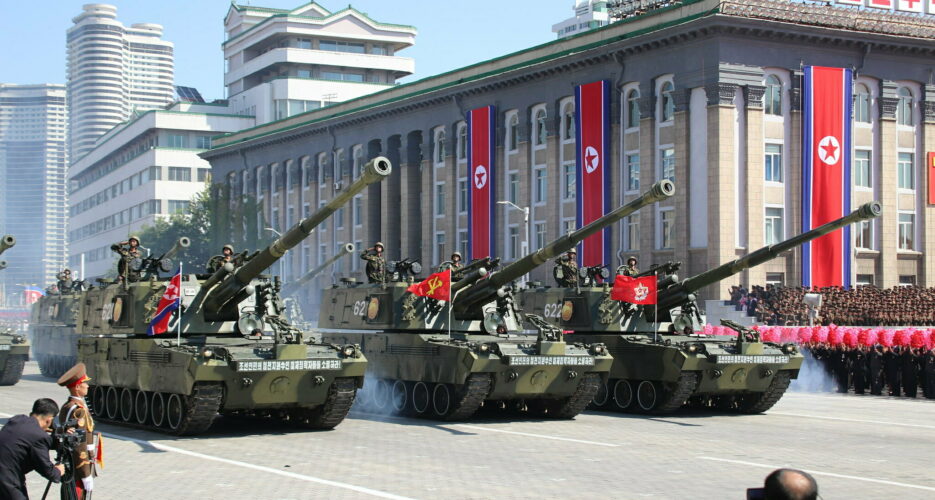
Image: NK News
In one week from next Wednesday, on the first day of the new decade, Kim Jong Un, the North Korean leader, will have to make a choice: What to do when his publicly declared year-end deadline for diplomacy with the U.S. arrives, and there’s still no deal in sight?
That question seems to have everyone guessing.
The U.S. commander of Pacific Air Forces, Gen. Charles Q. Brown, said last week that he expects the DPRK to launch “some kind of long-range ballistic missile” at the end of the year.
He also said — in the same interview — that it’s possible “nothing happens right away.”
Here in Washington — a city teeming with military commanders, North Korea watchers, and even the U.S. President himself — no one seems to know for sure what’s coming when the clock strikes midnight on January 1.
Whatever it may be — a missile into the Pacific Ocean, a satellite into space, or something else altogether — one thing seems to be sure: Three years into Donald Trump’s presidency, 18 months after he and Kim Jong Un shook hands and signed a vague denuclearization promise in Singapore, and with eight days left in this year, the U.S.-DPRK stalemate seems to be as fixed as it’s ever been.
And as for Kim Jong Un’s deadline, it may just mark the end of one unpredictable year and the start of another. Beyond that is anyone’s guess.
LONG ROAD TO A FAMILIAR RESULT
The world has known about Kim Jong Un’s deadline for months.
In April of this year, not long after President Trump walked out of his second summit with Kim, in Hanoi — the two reportedly disagreed over questions about the scale of sanctions relief — the DPRK leader went home and told his country that the Americans were now on the clock.
“We will wait for a bold decision from the U.S. with patience till the end of this year, but I think it will definitely be difficult to get such a good opportunity as the previous summit,” Kim said in a speech.
(In glaring contrast, before the Hanoi Summit, North Korean propaganda had anticipated “epoch-making results.”)
Diplomacy takes time, and in the months since that summit, the two leaders met each other again, they sent envoys to negotiate with each other in Stockholm, and Trump even walked into North Korean territory — a first for a sitting U.S. president.
But in that same period, the two nuclear-armed nations have also insulted each other (“Rocket Man” and “dotard”), warned each other, and, this month, begun outright threatening each other once again.
North Korea recently said it would give the U.S. a “Christmas gift” if it doesn’t get what it wants in negotiations, and this month conducted two tests at a satellite launching site that a senior army official said were helping the North develop “another strategic weapon.”
This week, the DPRK is expected to hold a party plenum that analysts say could establish hard-line policies for the coming year, and then Kim Jong Un will likely deliver a New Year’s speech to tell his countrymen what to expect over the next 12 months.
In his 2019 address, almost exactly one year ago, Kim warned that if the U.S. “persists in imposing sanctions and pressure” against the North, then “we may be compelled to find a new way for defending the sovereignty of the country … and for achieving peace and stability of the Korean peninsula.”
Yet that particular target of Kim Jong Un’s frustration — the punishing sanctions that were already in place on New Year’s Day 2019 — are all still there as of this article’s publication. North Korea recently said it would give the U.S. a “Christmas gift” if it doesn’t get what it wants in negotiations | Photo: Rodong Sinmun
Last week, Russia and China tried to push a proposal at the UN Security Council (UNSC) that would eliminate all sanctions “related to the livelihood of the civilian population of the DPRK.”
The State Department promptly rejected the proposal — “Now is not the time for the UN Security Council to consider offering premature sanctions relief,” a department spokesperson told NK News at the time — and a few days later, Trump signed even more sanctions targeting North Korea into law.
Those latest sanctions were tucked into a massive annual defense bill, which covers hundreds of U.S. domestic and foreign policy issues, most of which have nothing to do with North Korea. The DPRK sanctions don’t appear until page 1,046.
But Pyongyang may not care about that detail: the new sanctions in the legislation target North Korea’s coal, iron, textile, and seafood industries, banks that do business with the DPRK, and foreign countries that don’t do enough to enforce UN sanctions.
“We do believe that this will increase the pressure, and therefore increase our negotiators’ leverage — the Trump administration’s leverage — in dealing with the Kim regime,” Congressman Andy Barr, the author of the new sanctions in the U.S. House, told NK News in an interview last week.
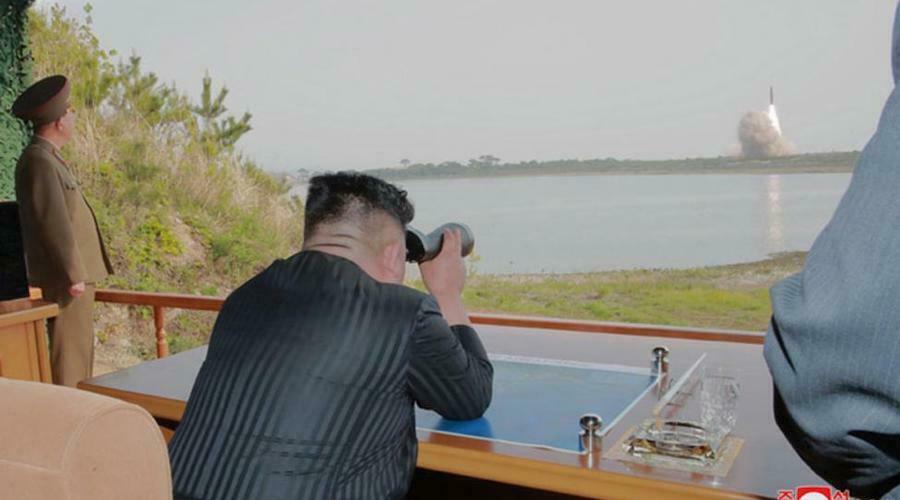 Trump’s envoy to North Korea, Stephen Biegun, told U.S. lawmakers in November he has seen “no evidence” that the DPRK has stopped its nuclear weapons program | Photo: KCNA
Beyond sanctions, the biggest question dividing Washington and Pyongyang, and perhaps the most intractable one, may be the fate of North Korea’s nuclear weapons program.
Trump’s envoy to North Korea, Stephen Biegun, told U.S. lawmakers in November he has seen “no evidence” that the DPRK has stopped its nuclear weapons program.
By some estimates, the DPRK already possesses a few dozen nuclear weapons, though the exact number is unclear.
Yet through all of this, Biegun has continued to insist that the administration wants diplomacy to succeed.
He was confirmed last week as Deputy Secretary of State, the number-two position in the State Department, and just returned to Washington on Friday after a whirlwind week-long trip to East Asia — perhaps a last-chance effort to restart talks with Pyongyang.
“It is time for us to do our jobs. Let’s get this done. We are here, and you know how to reach us,” Biegun said after arriving in Seoul, in comments directed at the North. “The United States does not have a deadline.”
His overtures to North Korea seem to have gone unanswered.
DOMESTIC PRESSURE FOR AN INTERNATIONAL DEAL?
As Kim Jong Un approaches his deadline with no sanctions relief to deliver to his country, President Trump is also facing his own political pressure at home.
He was impeached last Wednesday by the U.S. House of Representatives and recently warned North Korea not to disrupt his reelection campaign by conducting provocative missile tests.
“He knows I have an election coming up. I don’t think he wants to interfere with that,” Trump said recently.
In November, VOA reported that the Trump campaign sent out an email to supporters listing North Korea as one of eight “HUGE wins” for the President.
“Everything is about re-election for Trump,” said Sue Mi Terry, senior fellow for Korea at the Center for Strategic and International Studies in Washington and a former U.S. intelligence official.
Terry told NK News that if Trump signs a bad deal with North Korea out of political desperation, he would have to try to spin it as something great — or be forced to defend it to his Republican colleagues and the electorate.
“Right now, with all this domestic politics, the impeachment and all that, when he needs all the Republican senators in line to support him, does he throw yet another controversial thing their way?” Terry said in an interview.
“And that is not a question for a North Korea watcher to answer,” she added. “That needs someone who has an understanding of Donald Trump’s psychology.”
Samuel Wang, a professor of Neuroscience and Director of the Princeton Gerrymandering Project at Princeton University, told NK News that foreign policy achievements don’t always translate into electoral support (let alone victory) for a president.
“Approval numbers for both Presidents Bush benefited from international crises: Iraq, 9/11, Iraq again,” said Wang. “But in those cases, they were perceived as responding to events that were not their fault.”
“For any action by Trump to have a similar effect, it would probably have to be perceived as fixing a problem that he himself did not cause,” he added. “To affect his reelection, it would have to happen next summer.”

President Trump has warned North Korea not to disrupt his reelection campaign by conducting provocative missile tests | Photo: White House
For now, if Trump and his top deputies have a plan for solving the North Korea issue, they are not articulating it to the public.
“I don’t see any evidence that there’s a roadmap within the U.S. administration, within the Trump administration, for what exactly they’re pursuing,” said Celeste Arrington, an assistant professor of political science and international affairs at the George Washington University’s Elliott School of International Affairs.
“I’ve heard no rumors, any kind of plan, or coherent strategy — like, if this happens, then we do this,” Arrington told NK News in an interview. “And that to me is the biggest concern here.”
Some experts wonder if Trump will return to his “fire and fury” posture — the threat of war — if North Korea goes too far in its provocations.
Trump’s own former ambassador to the UN, Nikki Haley, recently published a book that claimed he was bluffing when he tried that approach in 2017.
“Make them think I’m crazy,” she quoted Trump as saying, according to South Korea’s Yonhap News Agency.
Trump also fired his hawkish advisor John Bolton, who once argued that the U.S. should preemptively attack North Korea — but recently expressed once more a willingness to use force against the DPRK if necessary.
“Now we have the most powerful military we have ever had and we are by far the most powerful country in the world, and hopefully we do not have to use it,” the President said. “But if we do, we will use it.”
In those same remarks, Trump also said that he still has a “really good” relationship with Kim JongUn
.
President Trump recently said that he still has a “really good” relationship with Kim Jong Un | The White House
There also seems to be no agreement on what Kim Jong Un might do if Trump can’t deliver the goods by January 1.
Experts said the possibilities could include a satellite launch; a hydrogen bomb test in space; more medium-range missile tests; the test of a long-range missile that can reach U.S. territory; or even a nuclear test.
Or, perhaps, just a cold shoulder to the U.S. while Trump fights for his political survival.
“It’s really unclear what happens if the end-of-year deadline passes without result,” Jenny Town, a Stimson Fellow and the Managing Editor of the website 38 North, told NK News. “But the signals coming from North Korea over the past few months are a cause for concern.”
Song Min-soon, the former South Korean Minister of Foreign Affairs & Trade, put it another way during recent remarks in Washington:
“When you pull out your sword, you have to cut at least a pumpkin,” he said.
WHAT A SUPREME LEADER WANTS
One source of trouble in U.S.-DPRK diplomacy may be the challenge of knowing what, exactly, Kim Jong Un even wants.
Sanctions relief? Security guarantee? Respect? Recognition? A Korean peninsula without a U.S. presence? Survival?
Jung Pak, a former U.S. intelligence official who is now the SK-Korea Foundation Chair in Korea Studies at the Brookings Institution, told NK News in an interview that the DPRK has formulated a wide-ranging list of demands as, simply, “the end of the U.S. hostile policy.”
This, she said, “is something that we can never match, because it’s only North Korea that decides what that hostile policy is.”
“And they keep wanting more,” she said. “So we would be going down a rabbit hole if we are trying to satisfy those demands.”
Whatever Kim does want, it may be impossible to know in advance, until the very moment the truth comes soaring in — via a letter, or a speech, or a missile, or a satellite, or something else entirely.
ENDING THE STALEMATE
It will likely take much more work to break out of the current stalemate, especially with more than six decades of hostility between the two nations, no diplomatic recognition, and a lingering state of war that technically never ended.
Alexandra Bell, Senior Policy Director at the Center for Arms Control & Non-Proliferation and a former State Department official, told NK News that diplomacy is slow — and, therefore, not ideal for a leader who may be looking for a quick and obvious political win.
“We should be looking for small victories, short term victories, and really concentrate on that,” she said in an interview. “What would it look like for North Korea to reenter the Non-Proliferation Treaty?”
“What would it look like for them to join a chemical weapons convention, a biological weapons convention, all these international agreements — a Comprehensive Nuclear Test Ban Treaty — all these things that enjoy pretty universal adherence, and North Korea is on the out?”
But the Brookings Institution’s Jung Pak told NK News that a small deal may not cut it for Kim Jong Un.
“I have very little reason to think that Kim would even go for a small deal, meaning he gives up some portion of his program,” said Pak.
“North Korea’s goals and our goals are fundamentally at odds,” she said. “We want them to give up their nuclear weapons; they won’t give up their nuclear weapons because they need it to ensure regime survival.”
Either way, if an arms control deal — or even total denuclearization — does eventually happen, it likely won’t be in the last eight days of 2019, before Kim Jong Un’s year-end deadline arrives.
“The width and breadth of the North Korea challenge will not be solved before the end of the year, it won’t be solved before the end of this term, it won’t be solved in the next decade,” said Bell.
“This is a years-long process that we are going to have to go through,” she said. “There is no Plan B. As tedious and frustrating and not sexy as it is, this slow, plodding process of nuclear negotiations is the only way ahead.”
Edited by James Fretwell
Still no deal in sight as Washington waits for North Korea’s next move
SHARE
Image: NK News
In one week from next Wednesday, on the first day of the new decade, Kim Jong Un, the North Korean leader, will have to make a choice: What to do when his publicly declared year-end deadline for diplomacy with the U.S. arrives, and there’s still no deal in sight?
That question seems to have everyone guessing.
The U.S. commander of Pacific Air Forces, Gen. Charles Q. Brown, said last week that he expects the DPRK to launch “some kind of long-range ballistic missile” at the end of the year.
He also said — in the same interview — that it’s possible “nothing happens right away.”
Here in Washington — a city teeming with military commanders, North Korea watchers, and even the U.S. President himself — no one seems to know for sure what’s coming when the clock strikes midnight on January 1.
Whatever it may be — a missile into the Pacific Ocean, a satellite into space, or something else altogether — one thing seems to be sure: Three years into Donald Trump’s presidency, 18 months after he and Kim Jong Un shook hands and signed a vague denuclearization promise in Singapore, and with eight days left in this year, the U.S.-DPRK stalemate seems to be as fixed as it’s ever been.
And as for Kim Jong Un’s deadline, it may just mark the end of one unpredictable year and the start of another. Beyond that is anyone’s guess.
LONG ROAD TO A FAMILIAR RESULT
The world has known about Kim Jong Un’s deadline for months.
In April of this year, not long after President Trump walked out of his second summit with Kim, in Hanoi — the two reportedly disagreed over questions about the scale of sanctions relief — the DPRK leader went home and told his country that the Americans were now on the clock.
“We will wait for a bold decision from the U.S. with patience till the end of this year, but I think it will definitely be difficult to get such a good opportunity as the previous summit,” Kim said in a speech.
(In glaring contrast, before the Hanoi Summit, North Korean propaganda had anticipated “epoch-making results.”)
Diplomacy takes time, and in the months since that summit, the two leaders met each other again, they sent envoys to negotiate with each other in Stockholm, and Trump even walked into North Korean territory — a first for a sitting U.S. president.
But in that same period, the two nuclear-armed nations have also insulted each other (“Rocket Man” and “dotard”), warned each other, and, this month, begun outright threatening each other once again.
North Korea recently said it would give the U.S. a “Christmas gift” if it doesn’t get what it wants in negotiations, and this month conducted two tests at a satellite launching site that a senior army official said were helping the North develop “another strategic weapon.”
This week, the DPRK is expected to hold a party plenum that analysts say could establish hard-line policies for the coming year, and then Kim Jong Un will likely deliver a New Year’s speech to tell his countrymen what to expect over the next 12 months.
In his 2019 address, almost exactly one year ago, Kim warned that if the U.S. “persists in imposing sanctions and pressure” against the North, then “we may be compelled to find a new way for defending the sovereignty of the country … and for achieving peace and stability of the Korean peninsula.”
Yet that particular target of Kim Jong Un’s frustration — the punishing sanctions that were already in place on New Year’s Day 2019 — are all still there as of this article’s publication.
North Korea recently said it would give the U.S. a “Christmas gift” if it doesn’t get what it wants in negotiations | Photo: Rodong SinmunLast week, Russia and China tried to push a proposal at the UN Security Council (UNSC) that would eliminate all sanctions “related to the livelihood of the civilian population of the DPRK.”
The State Department promptly rejected the proposal — “Now is not the time for the UN Security Council to consider offering premature sanctions relief,” a department spokesperson told NK News at the time — and a few days later, Trump signed even more sanctions targeting North Korea into law.
Those latest sanctions were tucked into a massive annual defense bill, which covers hundreds of U.S. domestic and foreign policy issues, most of which have nothing to do with North Korea. The DPRK sanctions don’t appear until page 1,046.
But Pyongyang may not care about that detail: the new sanctions in the legislation target North Korea’s coal, iron, textile, and seafood industries, banks that do business with the DPRK, and foreign countries that don’t do enough to enforce UN sanctions.
“We do believe that this will increase the pressure, and therefore increase our negotiators’ leverage — the Trump administration’s leverage — in dealing with the Kim regime,” Congressman Andy Barr, the author of the new sanctions in the U.S. House, told NK News in an interview last week.
Trump’s envoy to North Korea, Stephen Biegun, told U.S. lawmakers in November he has seen “no evidence” that the DPRK has stopped its nuclear weapons program | Photo: KCNABeyond sanctions, the biggest question dividing Washington and Pyongyang, and perhaps the most intractable one, may be the fate of North Korea’s nuclear weapons program.
Trump’s envoy to North Korea, Stephen Biegun, told U.S. lawmakers in November he has seen “no evidence” that the DPRK has stopped its nuclear weapons program.
By some estimates, the DPRK already possesses a few dozen nuclear weapons, though the exact number is unclear.
Yet through all of this, Biegun has continued to insist that the administration wants diplomacy to succeed.
He was confirmed last week as Deputy Secretary of State, the number-two position in the State Department, and just returned to Washington on Friday after a whirlwind week-long trip to East Asia — perhaps a last-chance effort to restart talks with Pyongyang.
“It is time for us to do our jobs. Let’s get this done. We are here, and you know how to reach us,” Biegun said after arriving in Seoul, in comments directed at the North. “The United States does not have a deadline.”
His overtures to North Korea seem to have gone unanswered.
DOMESTIC PRESSURE FOR AN INTERNATIONAL DEAL?
As Kim Jong Un approaches his deadline with no sanctions relief to deliver to his country, President Trump is also facing his own political pressure at home.
He was impeached last Wednesday by the U.S. House of Representatives and recently warned North Korea not to disrupt his reelection campaign by conducting provocative missile tests.
“He knows I have an election coming up. I don’t think he wants to interfere with that,” Trump said recently.
In November, VOA reported that the Trump campaign sent out an email to supporters listing North Korea as one of eight “HUGE wins” for the President.
“Everything is about re-election for Trump,” said Sue Mi Terry, senior fellow for Korea at the Center for Strategic and International Studies in Washington and a former U.S. intelligence official.
Terry told NK News that if Trump signs a bad deal with North Korea out of political desperation, he would have to try to spin it as something great — or be forced to defend it to his Republican colleagues and the electorate.
“Right now, with all this domestic politics, the impeachment and all that, when he needs all the Republican senators in line to support him, does he throw yet another controversial thing their way?” Terry said in an interview.
“And that is not a question for a North Korea watcher to answer,” she added. “That needs someone who has an understanding of Donald Trump’s psychology.”
Samuel Wang, a professor of Neuroscience and Director of the Princeton Gerrymandering Project at Princeton University, told NK News that foreign policy achievements don’t always translate into electoral support (let alone victory) for a president.
“Approval numbers for both Presidents Bush benefited from international crises: Iraq, 9/11, Iraq again,” said Wang. “But in those cases, they were perceived as responding to events that were not their fault.”
“For any action by Trump to have a similar effect, it would probably have to be perceived as fixing a problem that he himself did not cause,” he added. “To affect his reelection, it would have to happen next summer.”
President Trump has warned North Korea not to disrupt his reelection campaign by conducting provocative missile tests | Photo: White House
For now, if Trump and his top deputies have a plan for solving the North Korea issue, they are not articulating it to the public.
“I don’t see any evidence that there’s a roadmap within the U.S. administration, within the Trump administration, for what exactly they’re pursuing,” said Celeste Arrington, an assistant professor of political science and international affairs at the George Washington University’s Elliott School of International Affairs.
“I’ve heard no rumors, any kind of plan, or coherent strategy — like, if this happens, then we do this,” Arrington told NK News in an interview. “And that to me is the biggest concern here.”
Some experts wonder if Trump will return to his “fire and fury” posture — the threat of war — if North Korea goes too far in its provocations.
Trump’s own former ambassador to the UN, Nikki Haley, recently published a book that claimed he was bluffing when he tried that approach in 2017.
“Make them think I’m crazy,” she quoted Trump as saying, according to South Korea’s Yonhap News Agency.
Trump also fired his hawkish advisor John Bolton, who once argued that the U.S. should preemptively attack North Korea — but recently expressed once more a willingness to use force against the DPRK if necessary.
“Now we have the most powerful military we have ever had and we are by far the most powerful country in the world, and hopefully we do not have to use it,” the President said. “But if we do, we will use it.”
In those same remarks, Trump also said that he still has a “really good” relationship with Kim JongUn
.
President Trump recently said that he still has a “really good” relationship with Kim Jong Un | The White House
There also seems to be no agreement on what Kim Jong Un might do if Trump can’t deliver the goods by January 1.
Experts said the possibilities could include a satellite launch; a hydrogen bomb test in space; more medium-range missile tests; the test of a long-range missile that can reach U.S. territory; or even a nuclear test.
Or, perhaps, just a cold shoulder to the U.S. while Trump fights for his political survival.
“It’s really unclear what happens if the end-of-year deadline passes without result,” Jenny Town, a Stimson Fellow and the Managing Editor of the website 38 North, told NK News. “But the signals coming from North Korea over the past few months are a cause for concern.”
Song Min-soon, the former South Korean Minister of Foreign Affairs & Trade, put it another way during recent remarks in Washington:
“When you pull out your sword, you have to cut at least a pumpkin,” he said.
WHAT A SUPREME LEADER WANTS
One source of trouble in U.S.-DPRK diplomacy may be the challenge of knowing what, exactly, Kim Jong Un even wants.
Sanctions relief? Security guarantee? Respect? Recognition? A Korean peninsula without a U.S. presence? Survival?
Jung Pak, a former U.S. intelligence official who is now the SK-Korea Foundation Chair in Korea Studies at the Brookings Institution, told NK News in an interview that the DPRK has formulated a wide-ranging list of demands as, simply, “the end of the U.S. hostile policy.”
This, she said, “is something that we can never match, because it’s only North Korea that decides what that hostile policy is.”
“And they keep wanting more,” she said. “So we would be going down a rabbit hole if we are trying to satisfy those demands.”
Whatever Kim does want, it may be impossible to know in advance, until the very moment the truth comes soaring in — via a letter, or a speech, or a missile, or a satellite, or something else entirely.
ENDING THE STALEMATE
It will likely take much more work to break out of the current stalemate, especially with more than six decades of hostility between the two nations, no diplomatic recognition, and a lingering state of war that technically never ended.
Alexandra Bell, Senior Policy Director at the Center for Arms Control & Non-Proliferation and a former State Department official, told NK News that diplomacy is slow — and, therefore, not ideal for a leader who may be looking for a quick and obvious political win.
“We should be looking for small victories, short term victories, and really concentrate on that,” she said in an interview. “What would it look like for North Korea to reenter the Non-Proliferation Treaty?”
“What would it look like for them to join a chemical weapons convention, a biological weapons convention, all these international agreements — a Comprehensive Nuclear Test Ban Treaty — all these things that enjoy pretty universal adherence, and North Korea is on the out?”
But the Brookings Institution’s Jung Pak told NK News that a small deal may not cut it for Kim Jong Un.
“I have very little reason to think that Kim would even go for a small deal, meaning he gives up some portion of his program,” said Pak.
“North Korea’s goals and our goals are fundamentally at odds,” she said. “We want them to give up their nuclear weapons; they won’t give up their nuclear weapons because they need it to ensure regime survival.”
Either way, if an arms control deal — or even total denuclearization — does eventually happen, it likely won’t be in the last eight days of 2019, before Kim Jong Un’s year-end deadline arrives.
“The width and breadth of the North Korea challenge will not be solved before the end of the year, it won’t be solved before the end of this term, it won’t be solved in the next decade,” said Bell.
“This is a years-long process that we are going to have to go through,” she said. “There is no Plan B. As tedious and frustrating and not sexy as it is, this slow, plodding process of nuclear negotiations is the only way ahead.”
Edited by James Fretwell


No comments:
Post a Comment